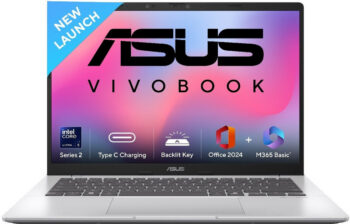
Why Are Laptop Prices Increasing in India in 2026?
<ul><li>Processor : Intel Core i3-1315U Processor 1.2 GHz (10MB Cache, up to 4.5 GHz, 6 cores, 8 Threads)</li><li> Display : 15.6-inch, Touch screen, FHD (1920 x 1080) 16:9 aspect ratio, 60Hz refresh rate, 250nits Brightness, Anti-glare display, 84% Screen-to-body ratio | Keyboard : Backlit Chiclet Keyboard</li><li> 【Software : Microsoft 365 Basic with 100GB Cloud Storage for 1 Year + Office Home 2024 with lifetime validity | Operating System : Windows 11 Home】</li><li> Graphics : Intergrated Intel UHD Graphics</li><li> Memory : 16GB DDR4 RAM | Storage : 512GB M.2 NVMe PCIe 4.0 SSD</li><li> I/O Ports :1x USB 2.0 Type-A (data speed up to 480Mbps), 1x USB 3.2 Gen 1 Type-C (data speed up to 5Gbps), 2x USB 3.2 Gen 1 Type-A (data speed up to 5Gbps), 1x HDMI 1.4, 1x 3.5mm Combo Audio Jack, 1x DC-in</li><li> Connectivity :Wi-Fi 6E(802.11ax) (Triple band) 1*1 + Bluetooth 5.3 Wireless Card (*Bluetooth version may change with OS version different.)</li><li> Camera : 720p HD camera ; With privacy shutter | Battery : 42WHrs, 3S1P, 3-cell Li-ion</li></ul>

Why Are Laptop Prices Increasing in India in 2026?
If laptops feel more expensive in 2026, you're not imagining it. But the story is bigger than a simple price hike.
India’s PC market is growing while manufacturers face higher component costs, especially around memory and graphics. That creates a difficult mix for buyers: strong demand, tighter supply in some components, and less certainty about how long today’s prices will last.
- What is pushing laptop prices higher in India
- Why RAM and DRAM matter so much
- How AI demand is changing the memory market
- Why some laptops can still get cheaper
- What Indian buyers should do right now
The short answer
- Yes, there is real price pressure IDC says Indian PC prices have already increased and expects further pressure from rising component costs.
- RAM is a major part of the story Memory costs matter because laptops need DRAM and SSD storage, and AI infrastructure is competing for memory supply.
- Not every laptop will rise equally Inventory, competition, new launches and promotions can still create good deals.
- Don't panic-buy The smart response is to track the exact configuration you want and buy when the value is right.
1. India's laptop market is growing despite higher prices
IDC says India's traditional PC market reached 4.4 million units in Q1 2026, up 31.1% year over year. Notebook shipments reached 3.3 million, up 55.4%, while AI notebook shipments grew 96.1%. At the same time, IDC says PC prices continued to rise because of component shortages and expects further pressure in the second half of the year. Source: IDC, India PC Market Q1 2026.
That combination is important. Demand has not collapsed just because prices are higher. In fact, some buyers and businesses have been purchasing earlier because they expect prices to rise further. IDC describes this as a pull-forward effect that can support shipments in the short term while making the second half of the year more uncertain.
What the headlines get wrong
The market is under price pressure, but individual models can still fall in price because of competition, inventory clearance and new product launches.
Retail pricing is not a direct one-to-one reflection of component costs.
AI demand is one contributor to the memory squeeze, but laptop prices also depend on CPUs, GPUs, displays, storage, currency, inventory and retailer competition.
The supply chain has multiple cost drivers.
A sale can help, but waiting is not guaranteed to produce a lower price—especially if component costs rise or the model sells through.
The exact product and its current market price matter more than the calendar.
2. RAM and DRAM are at the centre of the problem
A laptop contains several components whose prices can move independently, but memory deserves special attention in 2026.
DRAM is the memory used by a laptop's operating system and applications. NAND flash is used for SSD storage. Both sit inside a wider semiconductor supply chain that is being reshaped by the rapid build-out of AI infrastructure.
Recent reporting has highlighted how AI data-centre demand is absorbing a large amount of memory capacity, putting pressure on supply available to other electronics categories. Reuters reported in July that DRAM and NAND prices had risen sharply as AI-driven demand outpaced supply.
For a laptop buyer, the practical consequence is not simply “RAM will cost more.” It is that a good 16GB configuration can become more valuable when memory costs are under pressure, particularly if the laptop's RAM cannot be upgraded later.
If you are already considering a laptop with 16GB RAM, don’t assume you can always buy the 8GB version now and upgrade cheaply later. Some thin-and-light laptops use soldered memory, and future RAM pricing is uncertain. Check upgradeability before choosing the cheaper configuration.
3. How AI is indirectly affecting laptop prices
AI PCs are only one part of the story. The bigger effect is upstream.
AI data centres use large quantities of memory and high-performance computing hardware. As manufacturers prioritise higher-margin AI infrastructure, the supply-demand balance for memory components can tighten for other electronics.
IDC says AI notebook shipments in India rose 96.1% year over year in Q1 2026. That means the notebook market itself is also moving toward more capable systems, which can increase the average specification—and therefore the average cost—of new machines.
This is why we should separate two ideas: AI can increase component demand, while AI laptops can also increase what consumers expect from a new laptop. Both can influence pricing without every laptop receiving the same price increase.
4. Why GPUs can push prices higher too
The effect is even more visible in gaming laptops. A gaming machine has additional graphics hardware, cooling requirements and power-delivery components. When GPU costs rise, manufacturers have fewer ways to preserve the same selling price without changing the specification.
That doesn't mean every gaming laptop will become more expensive immediately. Older inventory can still be discounted, and competition between brands can produce attractive deals. But buyers should be careful about assuming that a future GPU generation will automatically make today's models cheaper.
5. Why some laptops can still get cheaper
The forces working in the other direction
Retailers and brands may discount previous-generation models to make room for new products.
A new generation can shift prices across a product family.
Amazon, Flipkart and other channels can compete aggressively on selected models.
Temporary promotions can change the effective purchase price.
6. What should Indian buyers do now?
A practical buying strategy for 2026
-
Choose your configuration first
Decide whether you need 16GB or 32GB RAM, how much storage you need, and whether you need dedicated graphics.
-
Track the exact model number
Price comparisons are meaningful only when the RAM, SSD, processor and display configuration match.
-
Compare at least two sellers
Check Amazon and Flipkart where the same model is available.
-
Look at the total value
Include warranty, display quality, battery, upgradeability and software—not just CPU performance.
-
Buy when the price is genuinely competitive
Don’t wait forever for a sale if the current offer is already strong and you need the machine.
7. Laptops worth watching while prices are changing
16GB laptops showing the range of today's market
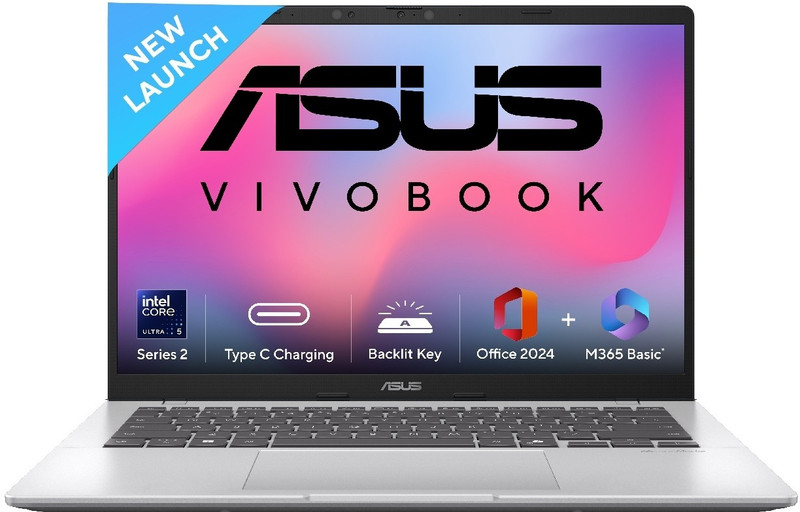
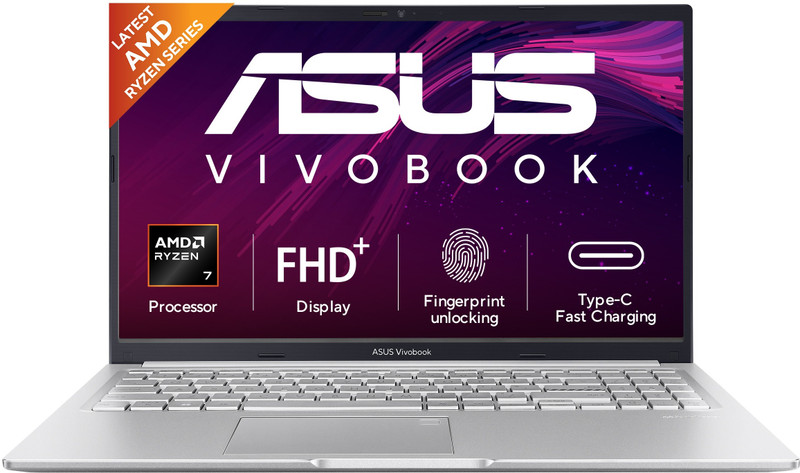
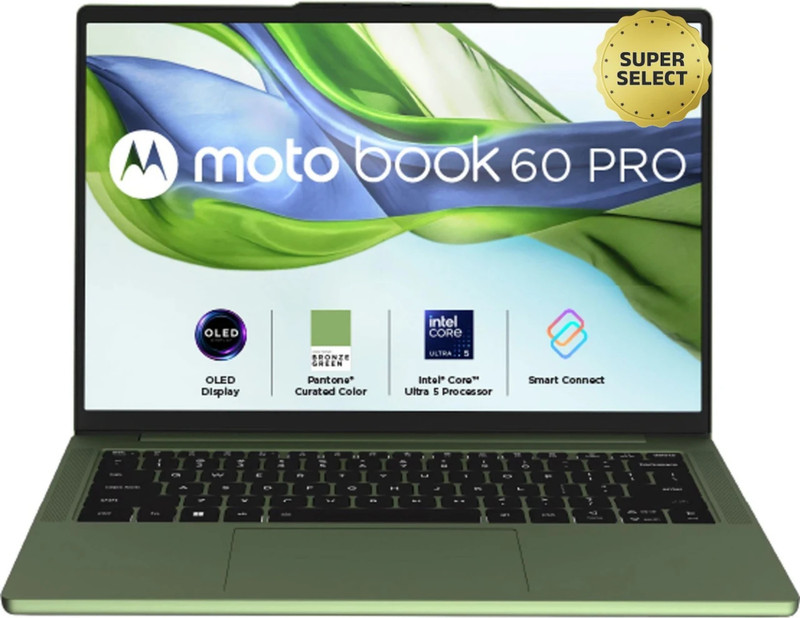
Same 16GB/512GB target, different trade-offs
|
Compact
ASUS Vivobook 14
|
Mainstream
ASUS Vivobook 15
|
OLED
Motorola Motobook 60 Pro
|
|
|---|---|---|---|
|
|
|
|
|
| RAM | 16GB DDR5 | 16GB DDR5 | 16GB DDR5 |
| Storage | 512GB SSD | 512GB SSD | 512GB SSD |
| Display | 14-inch FHD+ | 15.6-inch FHD | 14-inch OLED |
| Weight | 1.46kg | 1.7kg | 1.39kg |
| Platform | Core Ultra 5 225H | Ryzen 7 170 | Core Ultra 5 225H |
| BUY NOW | BUY NOW | BUY NOW |
 Flipkart
|
₹ 74,990 | BUY NOW |
|
Flipkart
|
₹ 79,990 | BUY NOW |
|
Flipkart
|
₹ 84,990 | BUY NOW |
| Amazon | – | BUY NOW |
| Amazon | – | BUY NOW |
| Amazon | – | BUY NOW |
Laptop price questions answered
Why are laptop prices increasing in India in 2026?
IDC says Indian PC prices have risen because of component shortages and expects further pressure, particularly from DRAM and GPU costs. Strong notebook demand is also keeping the market active.
Are RAM prices making laptops more expensive?
Memory is an important contributor to current pricing pressure. AI infrastructure is increasing demand for memory, while supply remains tight.
Will laptop prices fall later in 2026?
Some models can still become cheaper through competition, new launches and inventory clearance. A broad price drop across all laptops should not be assumed.
Should I buy a laptop now or wait?
If you need one soon and find a well-balanced configuration at a competitive price, buying now is reasonable. If your current laptop works well, waiting can make sense.
Is 16GB RAM worth buying in 2026?
For most buyers who want several years of use, 16GB is a sensible target. It is particularly useful when the laptop’s memory cannot be upgraded later.
Why are AI laptops affecting prices?
AI infrastructure is increasing demand for memory and high-performance computing components. AI-capable notebooks are also becoming a larger share of the laptop market.
Will gaming laptops become more expensive?
They can face additional pressure because dedicated GPUs add cost, but individual models can still be discounted when inventory or competition allows.
How AchhaDeals evaluates laptop price pressure
We separate market-level trends from individual product deals. A rising component cost does not automatically make every laptop a bad buy.
-
Market evidence
We use current industry research to understand the direction of pricing.
-
Configuration
We compare RAM, SSD, CPU, display and GPU rather than relying on model names.
-
Actual market price
We focus on the current selling price rather than the largest advertised discount.
-
Competition
We compare alternatives and merchant offers where available.
-
Long-term value
We consider upgradeability, warranty and how well the configuration should age.
Prices and availability can change quickly. Always check the live Content Egg offer before buying.
Our verdict
- Laptop prices are under genuine pressure in India in 2026, especially from memory and GPU costs.
- AI demand is an important part of the memory story, but it is not the only factor affecting laptop prices.
- Some laptops will still get cheaper because of competition, launches and inventory clearance.
- For most long-term buyers, 16GB RAM and 512GB SSD remain sensible targets.
- If you need a laptop and find a genuinely strong configuration at a fair price, don't wait indefinitely for an uncertain discount.
The right response to rising laptop prices is not panic. It is better price tracking, better configuration choices and a willingness to buy when the numbers make sense.
Continue the laptop price series
If you’re deciding whether to buy now or wait, read our pillar guide: Laptop Prices Are Rising in 2026: Should You Buy Now or Wait?
We'll build on this research with guides covering RAM prices, the best time to buy, and the best-value laptops at different budgets.